
Water Damage Cleanup Pros · Help in Columbus
First Steps When Water Gets Into Your Home or Business
Straightforward information about cleanup, drying and recovery.
Updated November 27, 2026
Visible water needs attention, but rushing into the affected room can add risk. Focus first on safe access, then on preventing further exposure and arranging the cleanup the materials need.
Avoid electrical and contamination hazards
Stay away from water that may contact energized equipment. Do not walk through sewage-contaminated rooms or use household fans to spread air from those rooms into clean areas. If the structure appears unsafe, stay out.
Record what you can safely see
Photograph affected rooms from a safe position and keep receipts related to the loss. Note the apparent source without opening walls or moving heavy wet materials yourself. A professional assessment may find damage beyond those first observations.
Address water and residual moisture
Professional extraction handles accessible water, while controlled drying treats moisture that remains in materials. Ask whether wet padding, wallboard or floor layers can be restored before covering or replacing finishes.
Frequently asked questions
What should I do first after finding water damage?
Keep away from electrical hazards and contaminated water. Stop the source only if it is safe, protect dry belongings, and arrange an assessment of wet materials.
Can moisture be hidden when the floor looks dry?
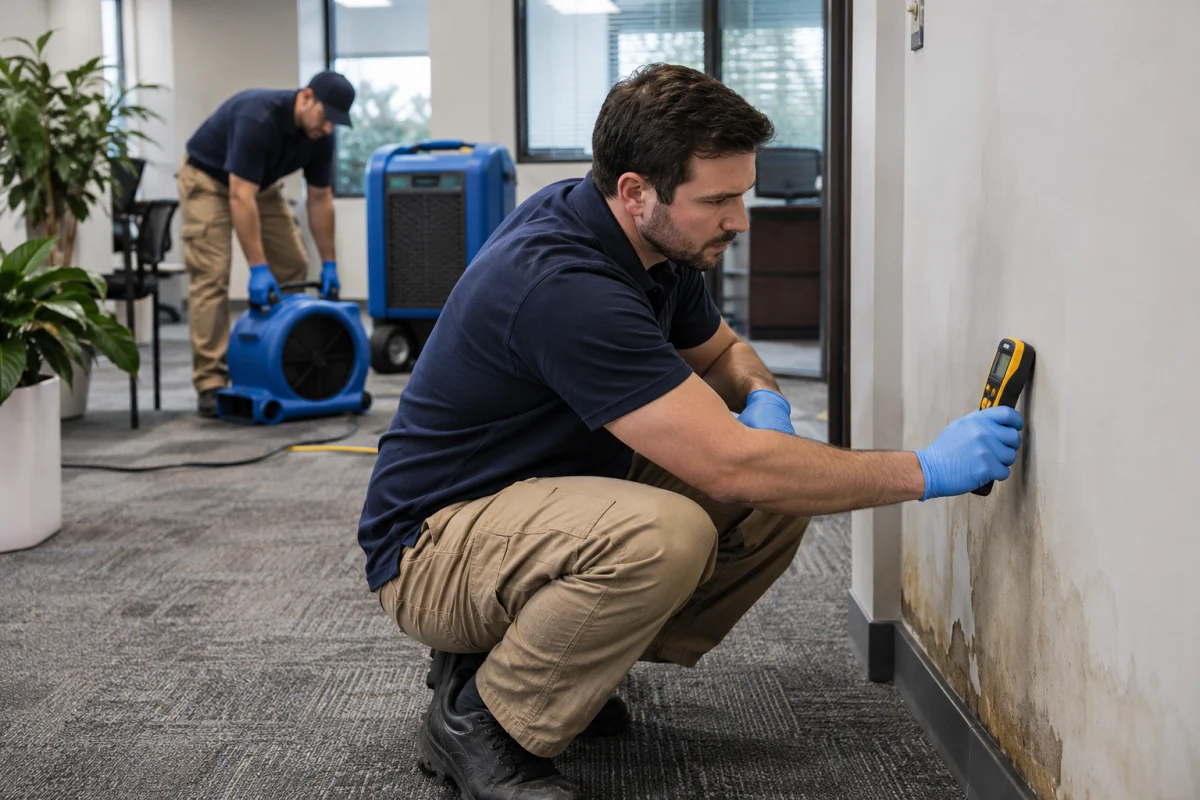
Yes. Water can remain under flooring, behind baseboards and inside walls. Moisture checks help establish the affected area before repairs begin.
What affects the cleanup price?
Affected area, water source, material condition, access, required removals and drying equipment influence the scope. Ask for an itemized written estimate.
Will my insurance pay for the work?
Coverage depends on the cause of damage and your policy. Report the loss to your insurer and keep photos, estimates, receipts and drying records.